
Tolerance and Freedom of Conscience Protected by National Legislation
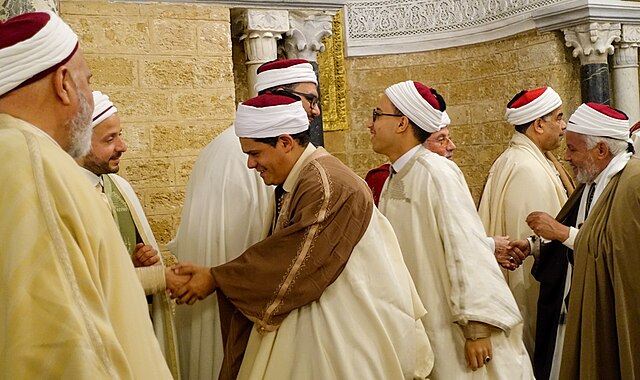
Takfir is the practice of declaring another Muslim an apostate, which eventually creates civil strife. Tunisia is one of the two Arabic countries that ban takfir, as it is set up in Article 6 of its constitution of 2014:
‘The state is the guardian of religion. It guarantees freedom of conscience and belief, the free exercise of religious practices and the neutrality of mosques and places of worship from all partisan use. The state is committed to spread the values of moderation and tolerance, to protect the sacred and forbid its violation. It is committed equally to forbid and fight against calls for apostasy and the instigation of violence and hatred.’
Context:
The September 11 attacks on the US in 2001 marked the start of the international ‘War on Terror’, resulting in the invasions of Afghanistan (2002) and Iraq (2003). These gave rise to a major escalation of sectarianism and extremism. The Amman Message was an early attempt to curb this conflict. Launched by Jordan in 2004, it tried to establish an Islam-West dialogue and put an end to both Islamophobia and Islamic terrorism. The Amman Message became a wide-scope Islamic agreement affirming that peace, justice, and mutual responsibility among all humankind are core values in Islam. It was endorsed by 552 prominent Muslims from 84 countries, reaching the widest Islamic consensus in modern times. The Amman Message calls for the outlawing of takfir at the national and international levels. There are only two Arabic countries that explicitly ban takir so far. One is the United Arab Emirates, and the other is Tunisian, as it is shown in this clipping. In the case of Tunisia, this achievement was the result of the negotiation between two oppositional forces during the political process that followed the revolution of 2011, a civil uprising that managed to topple the former authoritarian government in Tunisia. Bottom-up movements, along with a wide civil and political consensus, although imperfect, might be more effective in achieving major changes in national legislations than transnational top-down initiatives such as the Amman Message.
How can a state spread the values of moderation and tolerance? Can you recall an example from your own country?