
Thomas Jefferson: Build that Wall?
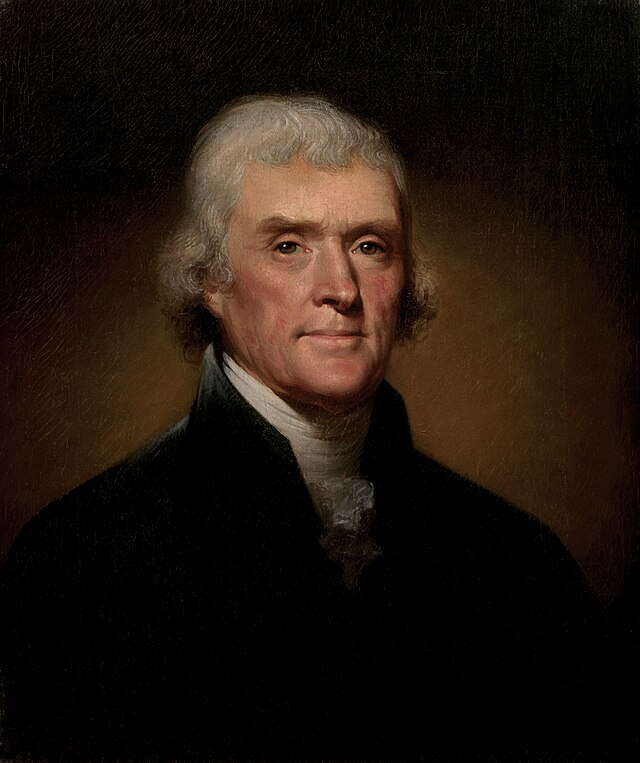
On New Year’s Day of 1801, Thomas Jefferson wrote to a committee of Protestant religious leaders. Jefferson was one of the so-called Founding Fathers of the United States and would become its third president only two months later. In his letter, he explicitly linked the First Amendment to the separation of Church and State. He mentioned that "religion is a matter which lies solely between Man and his God" and that no one could judge a person for his belief. He also said that "the legitimate powers of government reach actions only and not opinions". But, most remarkably, he also wrote that the First Amendment built "a wall of separation between Church and State".
The First Amendment to the US Constitution promises freedom of religion and freedom of speech to American citizens. Although it contains only 45 words, it was part of a much larger document, called the Bill of Rights. This document was mainly drafted by James Madison, a famous "founding father" of the United States. The Bill of Rights was needed because some politicians, who were called Anti-Federalists, believed that the Constitution did not do enough to protect the rights of individual people. The United States Congress approved the Bill on 25 September 1789. It was ratified two years later, and Congress turned parts of the Bill into amendments. This means that the new rules of the Bill of Rights were not a part of the Constitution itself, but were added as separate regulations to it. Since its creation, the First Amendment has been used in several legal cases to defend religious freedom. Although not all judges and courts have the same interpretation of what religious freedom means, it has served to protect the religious beliefs and actions of countless people who felt persecuted or discriminated against. It has even been used to defend atheists. Many lawyers have therefore debated what a religion exactly is, precisely because it offers a person such broad protection. For example, does a religion need a God, or is it sufficient to believe in something else? Or is a religion something you do together or something that you can have on your own?
Should the government have a say over religion? Or should there also be as strict a separation as Jefferson stated?
For more information on this and other peace treaties, see