
Confederation of Warsaw 1573 - Article V
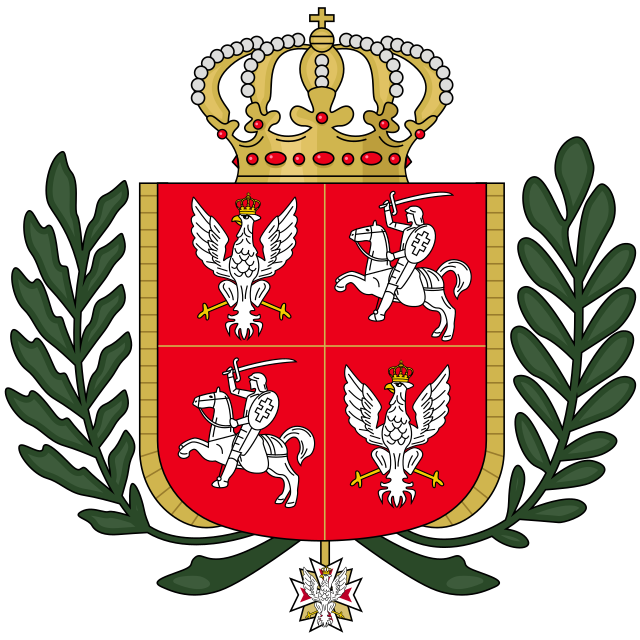
After the death of King Sigismund August in 1572, the nobility of Poland and Lithuania had to elect a new king. This election took place in a time of religious conflicts and political instability. At their meeting in Warsaw in January 1573, the Polish and Lithuanian nobles agreed on a document called the Confederation of Warsaw. The most important article reads:
‘We, the Estates of the Kingdom of Poland-Lithuania, have considered how we can maintain peace, justice and unity among ourselves in this dangerous situation in which we bear responsibility for the government after the death of the King. We therefore promise to observe the following articles: […]
Article V: Because in our kingdom there is not little, but great disagreement over matters of faith because of the Christian religion, we want to prevent for this reason any violent disputes between the camps from arising, as can be seen in other kingdoms. Therefore, under oath we promise ourselves and our descendants forever by our good faith, honor, and conscience: Although we are of different faiths, we will keep peace between us. We do not want to shed blood because of the practice of this or that religion or changes in worship services. Neither will we allow one to threaten the other over matters of faith to punish him, confiscate his goods, imprison him, or expel him. […] If anyone should try to force or shed blood for reasons of faith, we will oppose that, even if he should present a higher order for it. […]’
In 1573, Poland-Lithuania was one of the largest countries in Europe. Since 1569, Poland and Lithuania have been connected in the Union of Lublin. At the top stood the king. But the richest nobles represented in the Senate and the other nobles had a strong legal position. They made up almost ten percent of the population and regarded the state to be a “republic of nobles”. Being an electoral monarchy, after the death of King Sigismund II August in 1572, the new king of Poland was to be elected by the nobles. Many faith groups were represented in this vast country: Catholic and Orthodox Christians, but also Muslims and Jews. Since the middle of the 16th century, various evangelical groups have also found followers in Poland: Reformed (Calvinists) and Lutherans, Bohemian Brothers who had fled Bohemia, and other groups persecuted in the rest of Europe had found refuge there. Thus, Poland-Lithuania was a multi-religious state.
What does this declaration reveal about the political situation in which it was established? What does the document say about religious toleration?
Further information about The Confederation of Warsaw can be found at On Site, In Time.
For more information on this and other peace treaties, see