
Ashoka Rules that you should Learn about Other Religions
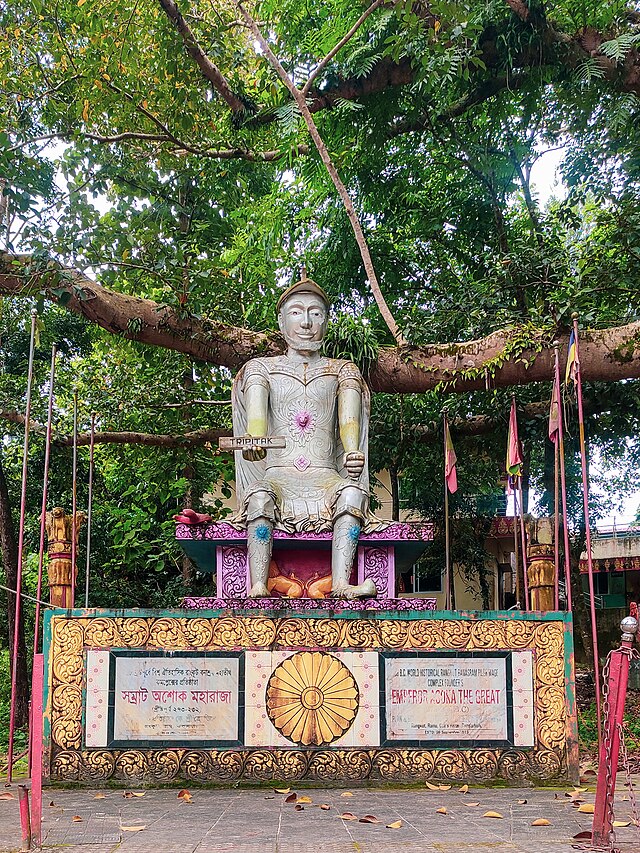
This is part of the text of Emperor Ashoka’s Rock Edict XII:
"Therefore concord alone is commendable, for through concord men may learn and respect the conception of Dharma (= the social rules) accepted by others. King Priyadarsi desires men of all faiths to know each other’s doctrines and to acquire sound doctrines. Those who are attached to their particular faiths should be told that King Priyadarsi does not value gifts as much as the growth in the qualities essential to religion in men of all faiths. Many officials are assigned to this task – the officers in charge of spreading Dharma, the superintendents of women on the royal household, the inspectors of cattle and pasture lands, and other officials."
Ashoka was a powerful Hindu ruler who inherited a large Indian empire from his grandfather. Initially, he was a fierce warrior who continued conquering new lands, even beyond India. However, he converted in 263 BCE (Before the Common Era, meaning before year 1 in the Western calendar). He switched from Hinduism to Buddhism and started to promote his new faith amongst his subjects. Most sources state that he did so because he was shocked by the destruction and death his armies had brought upon neighbouring kingdoms. He built many religious buildings and sent Buddhist monks to other lands, maybe even as far as to the Greek states. There are few historical sources about Ashoka, but some of the most important are the so-called Rock and Pillar Edicts. To spread his teachings and the law, Ashoka had both stories and rules inscribed on pillars or rocks all across his kingdom. These were situated in important towns or along important roads. In this way, both his subjects and travellers knew they were in the Empire of Ashoka and understood how they were meant to behave there.
Ashoka wants his subjects to learn about the faiths of others. Do you think this is useful?
For more information on this and other peace treaties, see