
Charter of Fundamental Rights of the European Union
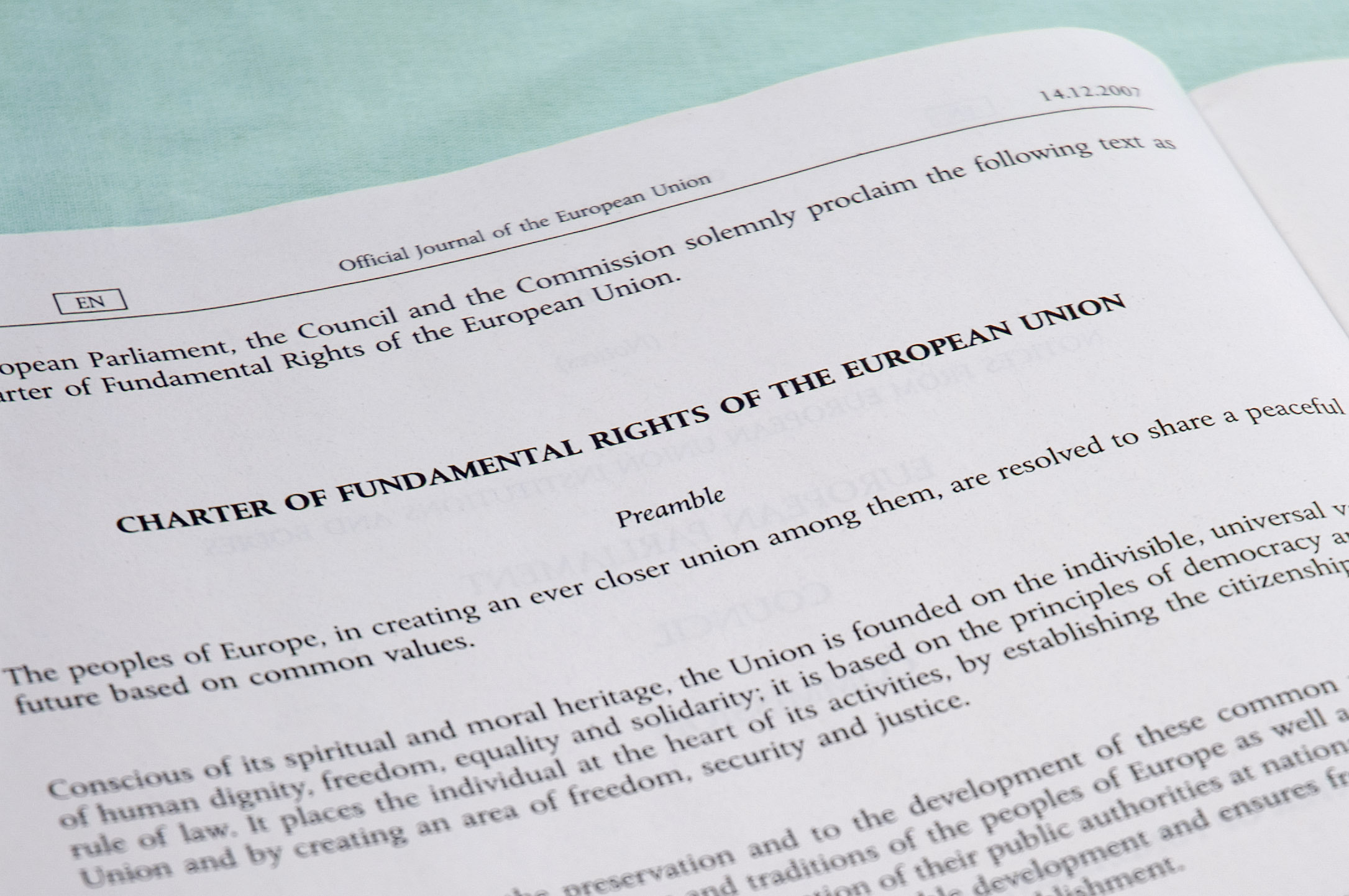
The Charter of Fundamental Rights of the European Union (CFREU) addressed the ‘spiritual and moral heritage’ of the European Community, which is founded upon the ‘indivisible, universal values of human dignity, freedom, equality and solidarity’, as well as the ‘principles of democracy and the rule of law’. The document envisioned the creation of ‘an even closer union’ among the European Union (EU) member states, based on European ‘common values’. The CFREU is also perceived as an attempt to overcome the shortcoming of the previous set of treaties which failed to include the rights provisions. Also worth mentioning is the 1957 Treaty on the Functioning of the EU (Treaty of Rome), which alongside the 1992 Treaty on European Union (Treaty of Maastricht), provide the constitutional basis of the EU. In general, the CFREU protects the right to hold religious or other beliefs.
The Charter of Fundamental Rights of the European Union (CFREU) was solemnly proclaimed in December 2000 at the Intergovernmental Conference held in Nice, France – the formal procedure of negotiating amendments to the founding treaties of the EU. The rights proclaimed by the CFREU were drawn from various international and national sources, as well as from the European Community’s own 1989 Charter of the Fundamental Social Rights of Workers. The CFREU was further recognised by the European Parliament, the Council of Ministers and the European Commission as a major step forward in the human rights field. The European Union Agency for Fundamental Rights is an EU body created in 2007 with a mission of monitoring, collecting and analysing data related to the CFREU.
The common values are high priority for the European community. Do you think that common values contribute to a formation of a closer community. Why so?
For more information on this and other peace treaties, see