
Background to the Good Friday Agreement
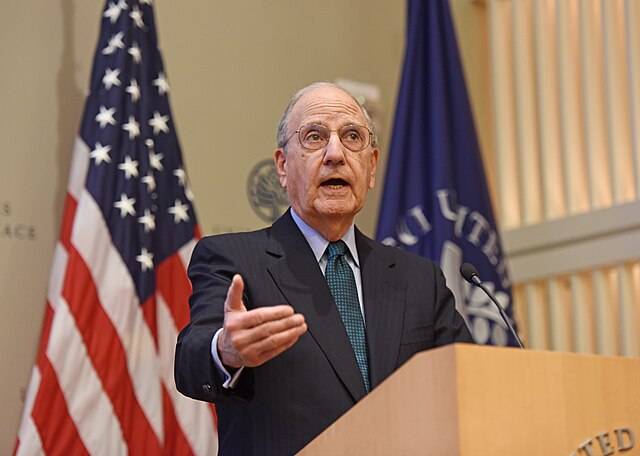
‘Relationships in the northern part of Ireland have been described over many centuries as “sectarian”. In large part this stems from the wars of religion that broke out across Western Europe in the sixteenth and seventeenth centuries, where the church split into those still loyal to the old order (Catholics) and a variety of independent challengers (Protestants). The resulting hostility … was not restricted to a narrow realm of “faith”, but shaped both politics and international relations and personal behaviour. It contributed directly to centuries of conflict and war. Often, the combination of politics and theology took on a “dualistic” character, where each side defined their cause as a stand for good opposed to evident evil. …Violent conflict in Northern Ireland after 1969 claimed over 3,000 lives and injured tens of thousands of others. Communities separated on territorial, educational and cultural lines. … After many efforts, the British and Irish governments signed the Anglo-Irish Agreement in 1985 and embarked, haltingly, on a joint project for ‘reconciliation’ across the traditional division, now often called the ‘peace process’. In 1994, the major loyalist and republican armed groups called ceasefires, and their political representatives entered direct negotiations with the governments and other parties. Financial and diplomatic support for the process came from both the European Union and the USA. After four years of progress and setbacks, negotiations chaired by Senator George Mitchell produced the Belfast or Good Friday Agreement on 10 April 1998.’
These extracts from a recent report summarise the background to the Good Friday Agreement. It points out that Northern Ireland’s religious divisions can be traced right back to the sixteenth century. Politics, though, have also been important. In 1923 it was decided to separate the 26 counties of southern and western Ireland from the six counties of the north east. The 26 counties – now the Republic of Ireland – became an independent country; the six counties became Northern Ireland and remained in the United Kingdom. Those in Northern Ireland who want to remain part of the United Kingdom are known as unionists and loyalists and are Protestants. Those who want a united Ireland are known as nationalists and republicans and are Catholics. There has been much debate about the relative importance of politics and religion in the Northern Ireland conflict. Both, though, are very much mixed up together in how communities see themselves and each other.
Can you think of other situations where politics and religion have become intertwined? Based on your experience, what approaches might help separate the two in ways that promote more tolerant and inclusive societies?
For more information on this and other peace treaties, see