
Edict of Saint-Germain: Cross-confessional solidarity during the French wars of religion
This clippings provides examples of solidarity between Catholics and Protestants during the wars of religion in France in the sixteenth century.From 1589 onwards, members of the Catholic League controlled Dijon. The Catholic League was an extremist movement aimed at eradicating any form of Protestantism out of France. The League also turned against all those who had a moderate and pacifying stance in the religious conflicts. Therefore, they also opposed the French king and his supporters. Hence, from 1589 onwards, Protestants and well-known moderates had to flee Dijon or go into hiding.
However, also during these pressing religious tensions, Protestant and Catholic inhabitants of Dijon continued to interact in a peaceful way. Anne Gueynot, for example, was the wife of a leader of the Catholic League in the French city of Dijon. In 1594, she helped Claude Bretagne to escape from the city. Bretagne had led a failed coup against the League. In 1590, a certain Marguerite Millière was interrogated about her continued contact with her sister and her Protestant brother-in-law. She surprised her interrogators when she answered that her sister’s religious faith was ‘such a little thing’.
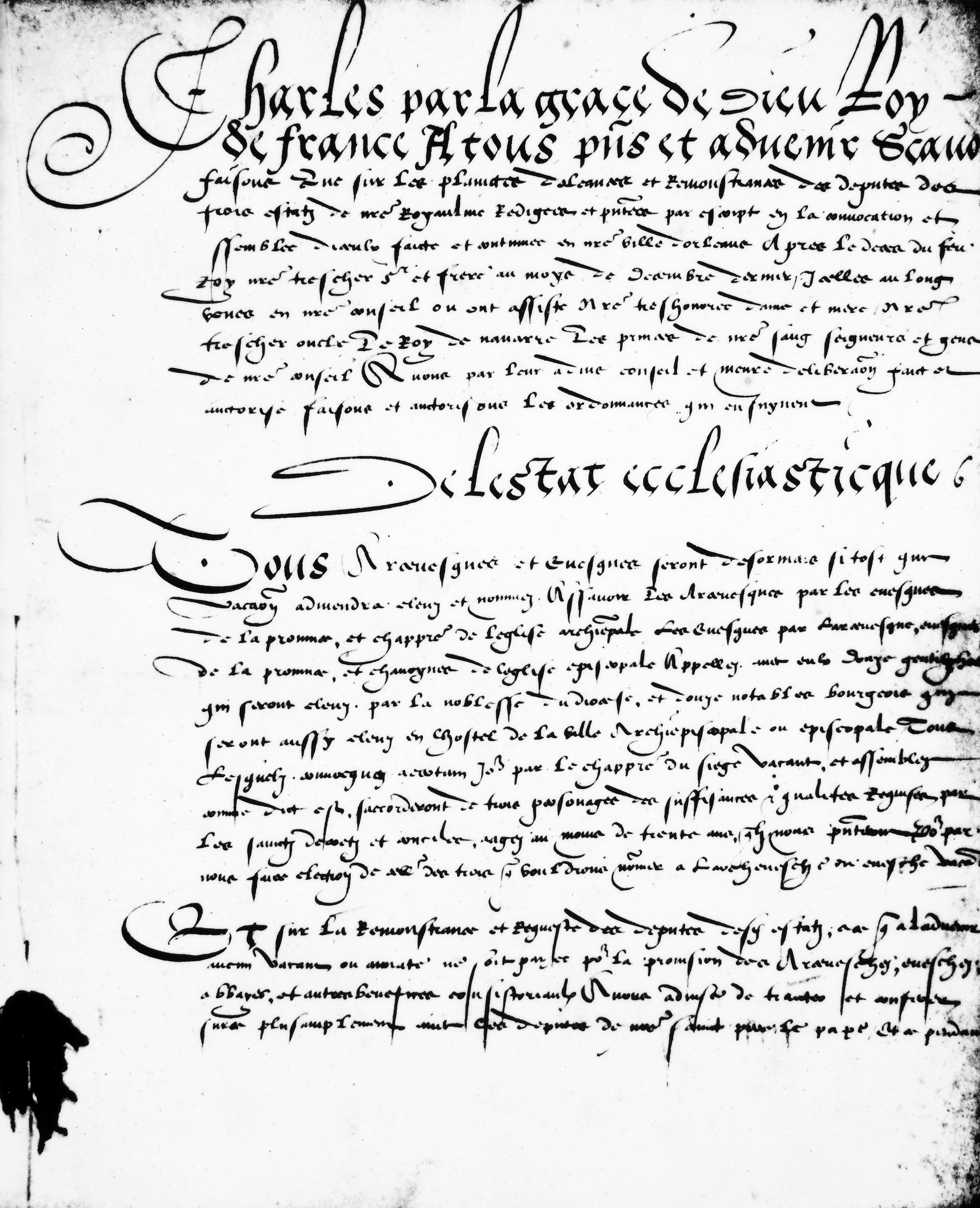
The Edict of Saint-Germain (1562) was a piece of legislation issued by the French king. It gave Protestants limited rights to worship in France. In previous decades, Protestantism had become popular in various parts of France. The French king, who himself was a Catholic, initially prosecuted Protestants. He considered deviations from Catholicism illegal. In spite of this prosecution, Protestantism continued to grow in France. Initially, Protestants gathered and celebrated in hiding. Over time, they also began to gather and worship in public. This created a tense situation throughout France.
The Edict of Saint-Germain sought to arrange peaceful coexistence between Protestants and Catholics. It gave them limited rights to worship outside cities. However, it met with opposition from Catholic nobles and judges, who considered it unacceptable to extend rights of worship to Protestants. Due to this opposition, tension continued. Protestants believed they were now allowed to celebrate publicly but at times were attacked nevertheless. They reacted by taking over control of the local government in various French cities. This led to the outbreak of the first French war of religion in the summer of 1562. For the next 37 years, religious wars and temporary pacification legislation followed one another.
In what context did Marguerite Millière make her statement? What does it mean when religion is ‘a little thing’?
For more information on this and other peace treaties, see
Title
Edict of Saint-Germain: Cross-confessional solidarity during the French wars of religion
content
This clipping provides examples of solidarity between Catholics and Protestants during the wars of religion in France in the sixteenth century.From 1589 onwards, members of the Catholic League controlled Dijon. The Catholic League was an extremist movement aimed at eradicating any form of Protestantism out of France. The League also turned against all those who had a moderate and pacifying stance in the religious conflicts. Therefore, they also opposed the French king and his supporters. Hence, from 1589 onwards, Protestants and well-known moderates had to flee Dijon or go into hiding.
However, also during these pressing religious tensions, Protestant and Catholic inhabitants of Dijon continued to interact in a peaceful way. Anne Gueynot, for example, was the wife of a leader of the Catholic League in the French city of Dijon. In 1594, she helped Claude Bretagne to escape from the city. Bretagne had led a failed coup against the League. In 1590, a certain Marguerite Millière was interrogated about her continued contact with her sister and her Protestant brother-in-law. She surprised her interrogators when she answered that her sister’s religious faith was ‘such a little thing’.
Context
The Edict of Saint-Germain (1562) was a piece of legislation issued by the French king. It gave Protestants limited rights to worship in France. In previous decades, Protestantism had become popular in various parts of France. The French king, who himself was a Catholic, initially prosecuted Protestants. He considered deviations from Catholicism illegal. In spite of this prosecution, Protestantism continued to grow in France. Initially, Protestants gathered and celebrated in hiding. Over time, they also began to gather and worship in public. This created a tense situation throughout France.
The Edict of Saint-Germain sought to arrange peaceful coexistence between Protestants and Catholics. It gave them limited rights to worship outside cities. However, it met with opposition from Catholic nobles and judges, who considered it unacceptable to extend rights of worship to Protestants. Due to this opposition, tension continued. Protestants believed they were now allowed to celebrate publicly but at times were attacked nevertheless. They reacted by taking over control of the local government in various French cities. This led to the outbreak of the first French war of religion in the summer of 1562. For the next 37 years, religious wars and temporary pacification legislation followed one another.
Questions
In what context did Marguerite Millière make her statement? What does it mean when religion is ‘a little thing’?
Temporal Coverage
16th century
Spatial Coverage
Europe, France
map
47.316667 / 5.016667
Subject
Is Referenced By
Bibliographic Citation
S. Annette Finley-Croswhite, Engendering the Wars of Religion: Female Agency during the Catholic League in Dijon, French Historical Studies, Vol. 20, No. 2 (Spring, 1997), pp. 127-154
Audience
Yes
Creator
Christophe Schellekens

