
The Pact of Umar
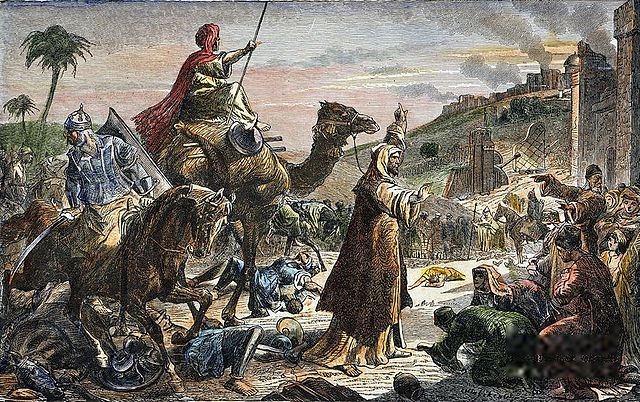
In the 7th century, the followers of the Prophet Muhammad conquered large areas of Arabia and the Middle East—regions home to people of many different religions. To manage this religious diversity, a set of rules known as the Pact of Umar was established. It outlined how non-Muslims, especially Jews and Christians, could live within Muslim-ruled lands.
The Pact specifically applied to the “People of the Book”—a term used in Islam for those who follow a holy scripture revealed by a prophet, such as the Torah or the Bible. Jews and Christians were granted a special status called dhimmi, meaning "protected people." The Pact did not address followers of other religions.
These rules influenced later Islamic law. However, the exact origin and meaning of the Pact remain debated, and how the rules were applied varied widely across time and place. In many cases, non-Muslims were tolerated and even allowed to thrive. Some dhimmis became wealthy and influential, holding high positions such as vizier (chief minister) or governor. However, they were not allowed to become the highest ruler, such as a sultan. In other times and places, discrimination and restrictions against dhimmis were more severe.
From a modern perspective, this system may seem unfair. Yet, compared to Christian Europe before the 19th century—where people of other faiths, especially Muslims, were rarely tolerated—Muslim empires offered a form of legal protection and official recognition to non-Muslims.
Today, the situation varies across the Muslim world. In countries like Saudi Arabia, there is little religious freedom, while others, like Indonesia, recognize religious diversity and pluralism.
In recent years, the status of dhimmis has become a subject of debate. Some view them as an example of historical oppression, while others see the system as a model of religious tolerance. Most historians agree that the Pact of Umar was a way to organize society and maintain order in the multicultural empires of the Islamic world.
How did the Pact of Umar help manage religious diversity in early Islamic empires, and why do people today have different views about its meaning?