
Discriminating Tolerance?
"The Poll Tax is only accepted from members of the book religion and Zoroastrians. All other non-believers have to convert to Islam or will be killed. This is according to the jurists from Medina, the Hijaz and Iraq, followed by Ibn Wahb and this is the dictum of Sa’fi."
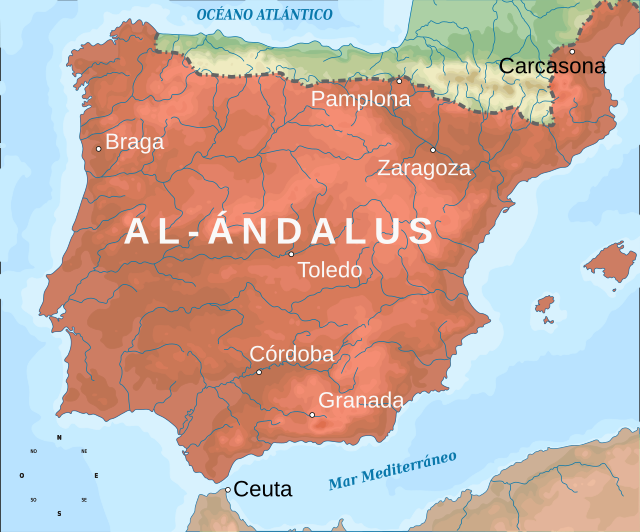
This was the opinion of the eleventh-century jurist Ibn ʽAbd al-Barr on the Jizya or Poll Tax. The Poll Tax was a special tax paid to Muslim governments, in return for which you could keep your non-Islamic religion. The rule was based on the Pact of Umar, but appeared in many different versions. The version above comes from a short legal textbook written in the eleventh century. Ibn 'Abd al-Barr lived in Islamic Portugal and Spain (Al-Andalus). He used different, older legal sources to form his own opinion about the status of the Christians and Jews in Islamic law.
The Pact or Covenant of Umar determined the rules under which non-Muslims, such as Jews and Christians, could live in Muslim lands. The followers of Muhammad had conquered large parts of Arabia and the Middle East in the seventh century, lands that were inhabited by many different religions. Of these religions, the Jews and Christians enjoyed a special status, as they were considered "people of the book", similar to the Muslims. All three religions are based on a holy text revealed by a Prophet or Messiah. Although nobody knows for sure, the rules for non-Muslims were probably set by Caliph Umar I, who ruled from 634 to 644. One of the most important laws was that Christians and Jews needed to pay a special tax, called Jizya, to the Muslim government. In return for this, they received the status of Dhimmi, which means "people of protection". In the following centuries, many Muslim rulers and lawyers debated about the exact meaning of the Pact of Umar and about the exact rules that applied to the Dhimmi in their lands. Interestingly, many of the sources we have attest that the Christians and the Jews imposed these rules on themselves. For example, letters to Umar and one of his commanders state that they sought the Caliph’s protection: "When you [Umar] came to us [the Christians], we asked of you safety for our lives, our families and our property, and the people of our religion on these conditions." Those conditions mainly involved respect from the Christians towards the Muslims and the Islamic Faith, as well as a promise not to obstruct followers of Islam. In recent years, political groups have also debated the status of the Dhimmi. Some see them as oppressed people, while others see their status as a key example of religious tolerance on the part of the Muslims.
Do you think that religious tolerance should apply to all religions equally? Or are there reasons to be tolerant towards some religions but not towards others?
For more information on this and other peace treaties, see