
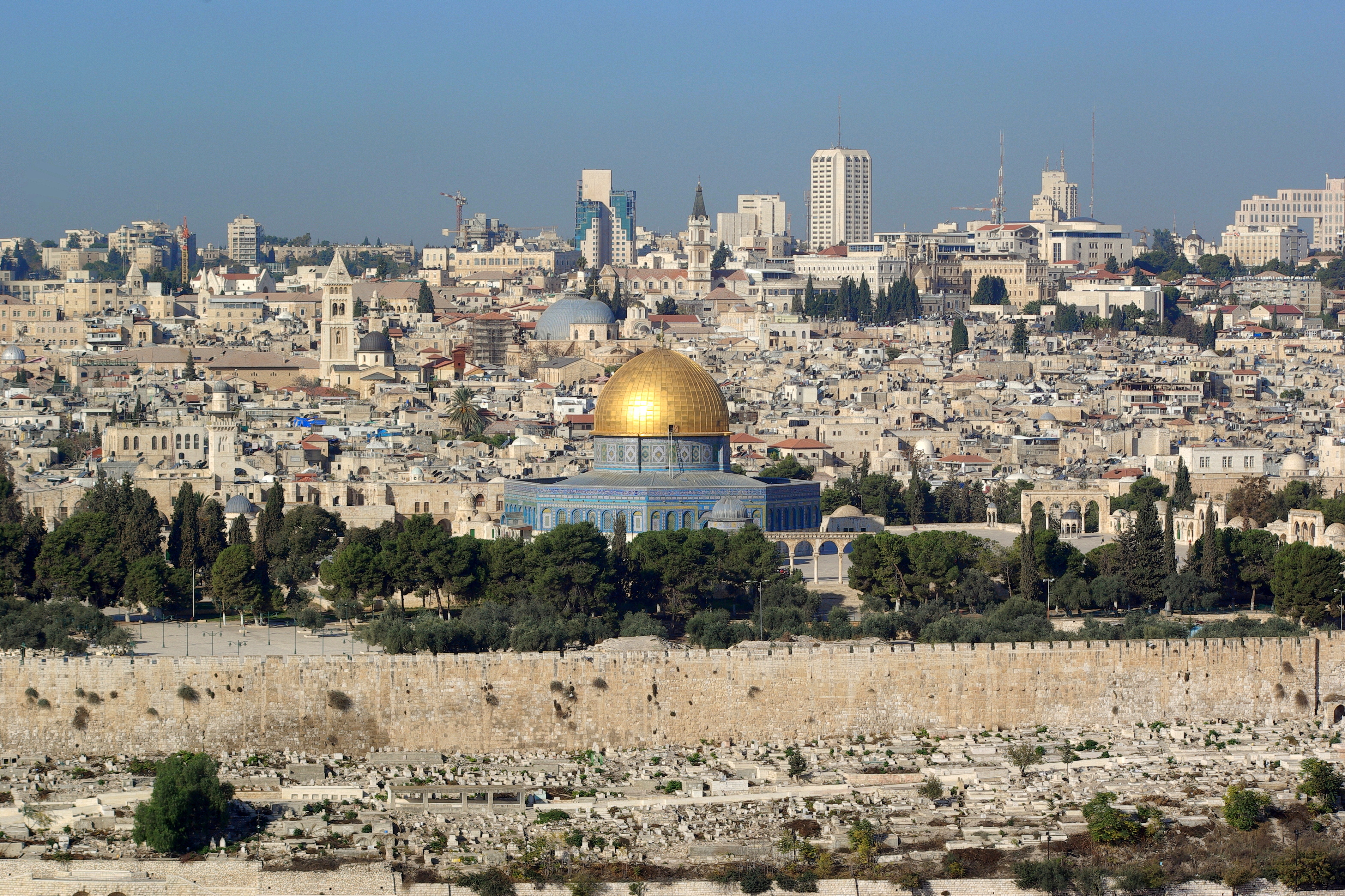
Building in Jerusalem
Context:
The Pact or Covenant of Umar determined the rules under which non-Muslims such as Jews and Christians could live in Muslim lands. The followers of Muhammed had conquered large parts of Arabia and the Middle East in the seventh century, lands that were inhabited by many different religions. Of these religions the Jews and Christians enjoyed a special status, as they were considered ‘people of the book’, similar to the Muslims. All three religions based themselves on a holy text revealed by a Prophet or Messiah. Although nobody knows for sure, the rules for non-Muslims were probably set by Caliph Umar I, who ruled from 634 to 644. One of the most important laws was that Christians and Jews needed to pay a special tax, called Jizya, to the Muslim government. In return for this, they received the status of Dhimmi, which means ‘people of protection’. In the following centuries, many Muslim rulers and lawyers debated about the exact meaning of the Pact of Umar and about the exact rules that applied to the Dhimmi in their lands. Interestingly, many of the sources we have attest that the Christians and the Jews imposed these rules on themselves. For example, letters to Umar and to one of his commanders state that they sought the Caliph’s protection: ‘When you [Umar] came to us [the Christians], we asked of you safety for our lives, our families and our property, and the people of our religion on these conditions.’ Those conditions mainly involved respect from the Christians towards the Muslims and the Islamic Faith, as well as a promise not to obstruct followers of Islam. In recent years, political groups have also debated the status of the Dhimmi. Some see them as oppressed people, while others see their status as a key example of religious tolerance on the part of the Muslims.
Was the Muslim witness an example of tolerance or opportunism? What could have been the reasons for the Patriarch to break the law? Was commander Ubaydallah being intolerant when he launched his inquiry?
For more information on this and other peace treaties, see