
Freedom to choose between Protestantism and Catholicism: Religioensvrede Article II of the treaty
The following is a liberal translation from the original into more modern, understandable English:
To avoid and prevent discord and debate, it has been ordered that anyone can adhere to either of the two religions (Catholic or Reformed), as he seeks to account to God. This diversity of religion may not be maintained, introduced or suppressed with arms. It should be done without disturbing anyone else. Everyone should be allowed to maintain previous religious ties as well as other ties. One should be allowed to serve God according to his own understanding and judgement. Everyone may choose his religion as he wants to defend it when he will be judged by God.
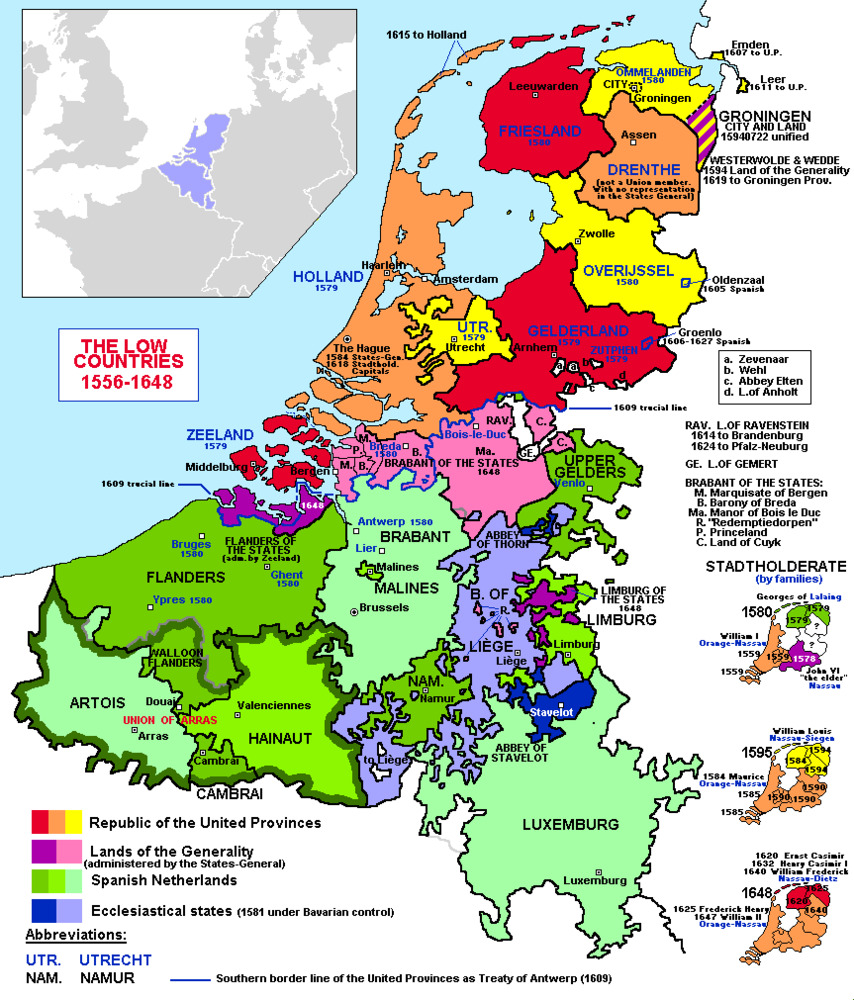
How strong do you think is the connection between religious belonging and geographical background? How linked are religious conflicts to particular regions?
Further information about the Religioensvrede and Amsterdam can be found at On Site, In Time.
For more information on this and other peace treaties, see