
Religion and the geography of the early modern Low Countries
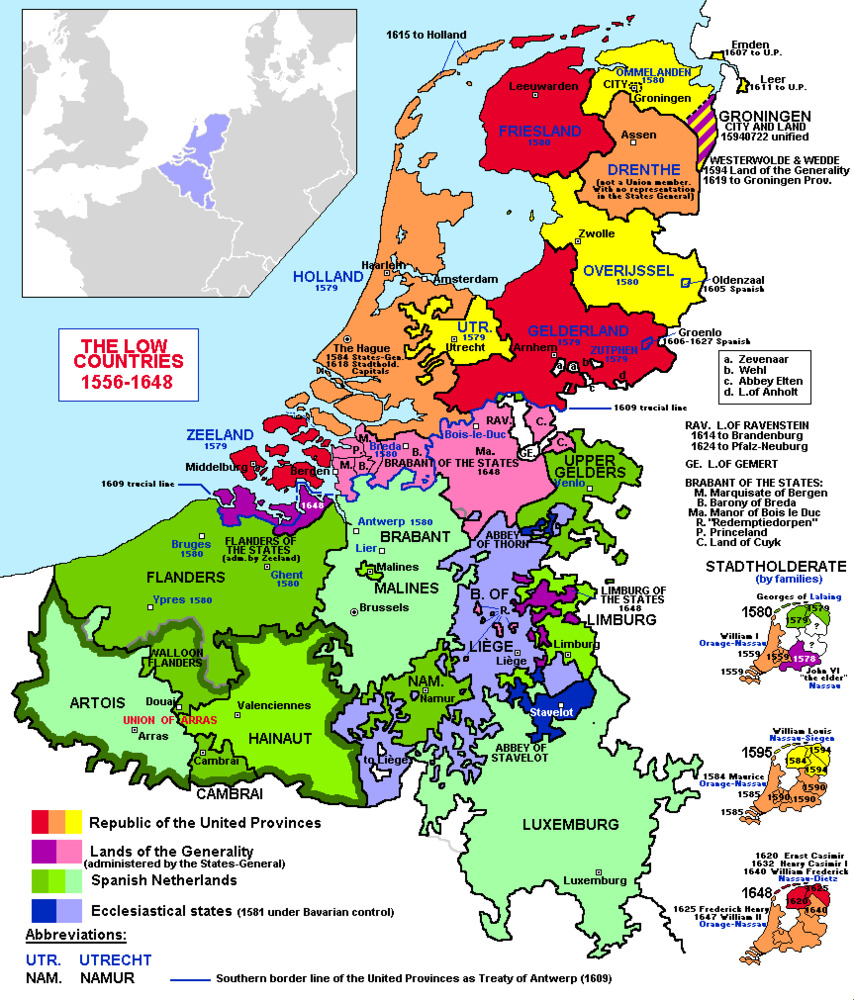
The Religioensvrede (1578) was an arrangement to allow Catholics and Protestants to live together in the Low Countries. The Low Countries were a region that roughly comprised present-day Belgium and the Netherlands. In the years before 1578, the government of the Low Countries had only allowed Catholicism and persecuted Protestants. In the regions taken over by Protestants, Catholics were treated badly and faced violence. The Spanish army supported the Catholic government of the Low Countries. The soldiers of the army fought against the Protestants, but also harassed many Catholics. Moderate Catholics and Protestants from the Low Countries made peace with each other by uniting in their opposition to the Spanish army. To maintain this peace, they developed a series of rules, obligations and prohibitions to facilitate the coexistence of Catholics and Protestants. These various measures were listed in the Religioensvreden.
How strong do you think is the connection between religious belonging and geographical background? How linked are religious conflicts to particular regions?
Further information about the Religioensvrede and Amsterdam can be found at On Site, In Time.
For more information on this and other peace treaties, see