
Westphalian Peace – Hans Heberle on the end of the war 1650
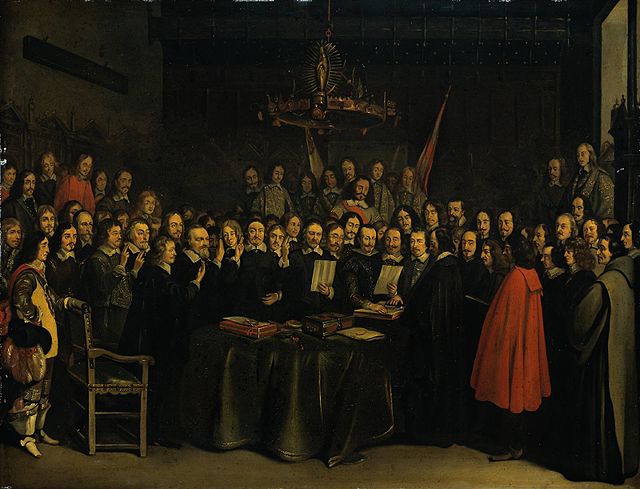
Hans Heberle was a shoemaker from Neenstetten, a village about 20 km north of the south German city of Ulm. Heberle kept a diary for over 50 years during the Thirty Years' War and afterwards. In it, he describes the suffering during the war, but also the joy of peace from the perspective of the civilian population. He expresses his thankfulness to God for having given the peace.
From the diary of Hans Heberle:
‘[1650] Now a complete Imperial peace has been concluded, for which we should rightly thank and praise God and tell our children's children that they should pray for a peaceful time. For where is war, there is God's punishment and wrath, there is confusion. There is no vice that does not occur in times of war: fornication, eating and drinking, robbery and stealing, burning and murdering, misery and need, hunger and sorrow, inflation and sickness, in summa all punishments and plagues. Therefore, we should ask for peace daily and hourly, for where is peace there is happiness and blessing. I have experienced both, war and peace, and have seen and experienced all sorts of things. I have probably experienced and endured the three punishments, war, inflation and pestilence, hunger and misery. I have often been in great danger with my wife and children, I have made more than 30 escapes to Ulm, sometimes at a dark night, often in great rain, snow, cold, often with great danger from the soldiers, I have often been plundered on the way, I have often not had a bite of bread with my wife and children, I have often been ill in Ulm with my wife and children, two children have died in Ulm and my son Hans was born there. I cannot describe the misery, so I want to stop and let it be.’
Context:
Hans Heberle’s diary is one of a few texts which ordinary people have written to report their experiences during the Thirty Years' War. He recounts the escapes with his whole family into the city of Ulm fleeing from the troops and expresses his feelings of thankfulness for the Peace of Westphalia.
Can you imagine how Hans Heberle felt about the Peace of Westphalia?
Further information about the Westphalian Peace can be found at On Site, In Time.
For more information on this and other peace treaties, see