
Westphalian Peace 1648 – Paragraphs V Art. 1, summarized
In paragraph 5 of the Westphalian Peace Treaty, the conflicting parties talk about the reasons of the Thirty Years’ War. They agree on the fact that the religious fight between the Catholics and the Protestants in the German Empire has contributed to the outbreak of the war. As a consequence, they want to return to the Peace of Augsburg of 1555 (see clipping Augsburg 1555 – Articles 15-17). All violent attempts to change its regulations are prohibited forever. Both sides shall enjoy equal political rights. These thoughts are expressed in juridical and complicated terms:
Ԥ5 Now whereas the Grievances of the one and the other Religion, which were debated among the Electors, Princes and States of the Empire, have been partly the Cause and Occasion of the present War, it has been agreed and transacted in the following manner.
1. The Religious Peace of 1555 shall be confirmed and observed fully and without infringement. In all matters there shall be an exact and mutual equality between all the rulers, the Electors, Princes, and Estates of either religion, so that what is right for one side shall also be right for the other. All violence and other contrary proceedings being herewith forever prohibited. A perfect and reciprocal equality between all the Electors, Princes, and Estates, of both confessions shall prevail, as befits the constitution of the Empire, the Imperial laws and the present treaty.’
Context:
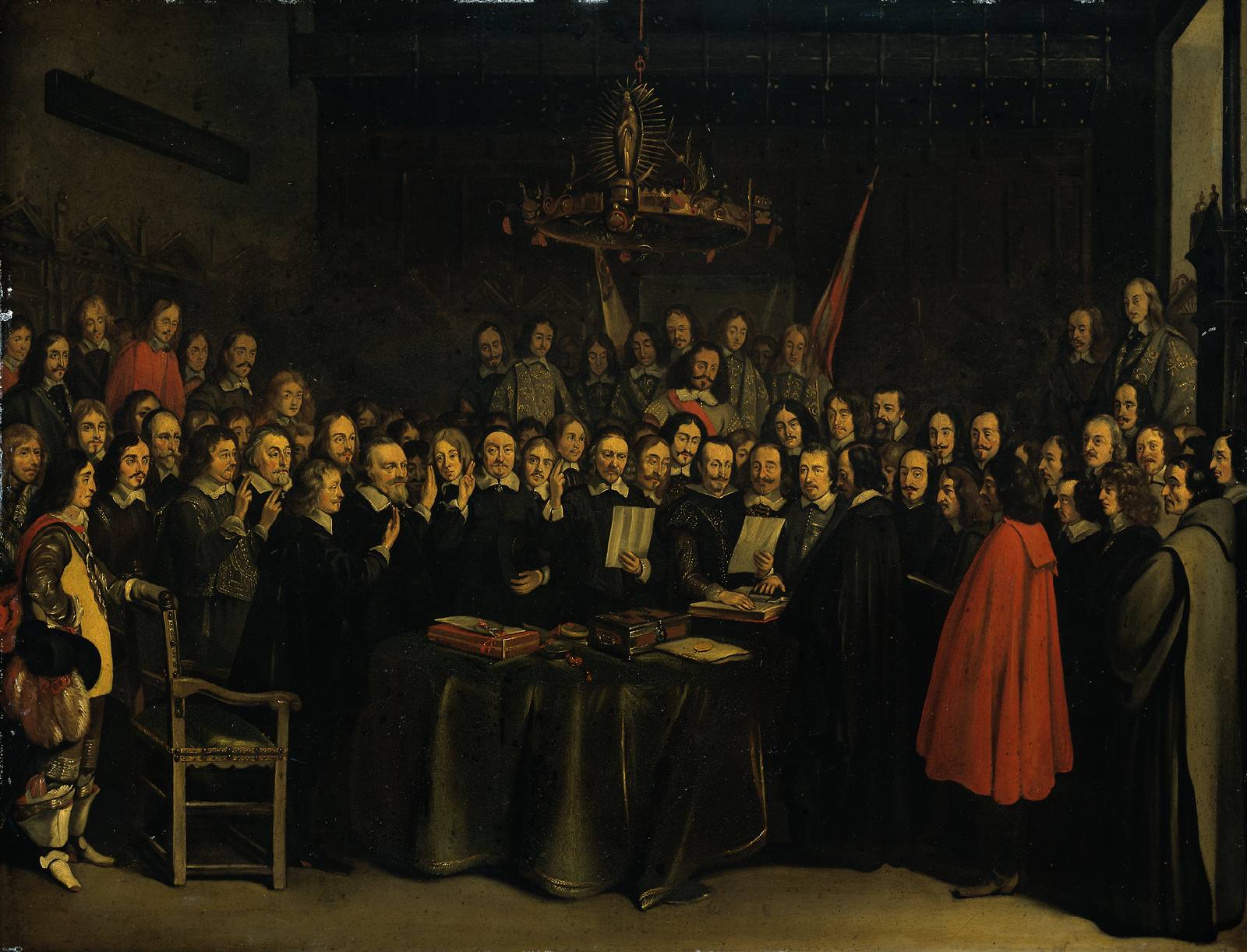
After four years of negotiations, the treaties of Münster and Osnabrück were signed and proclaimed in October 1648. Putting an end to 30 years of war, the treaties found political regulations for the co-existence of different Christian confessions in Germany. They established a new political balance between the European powers.
Further information about the Westphalian Peace can be found at On Site, In Time.
For more information on this and other peace treaties, see