
Westphalian Peace 1648 – Paragraphs V Art. 2
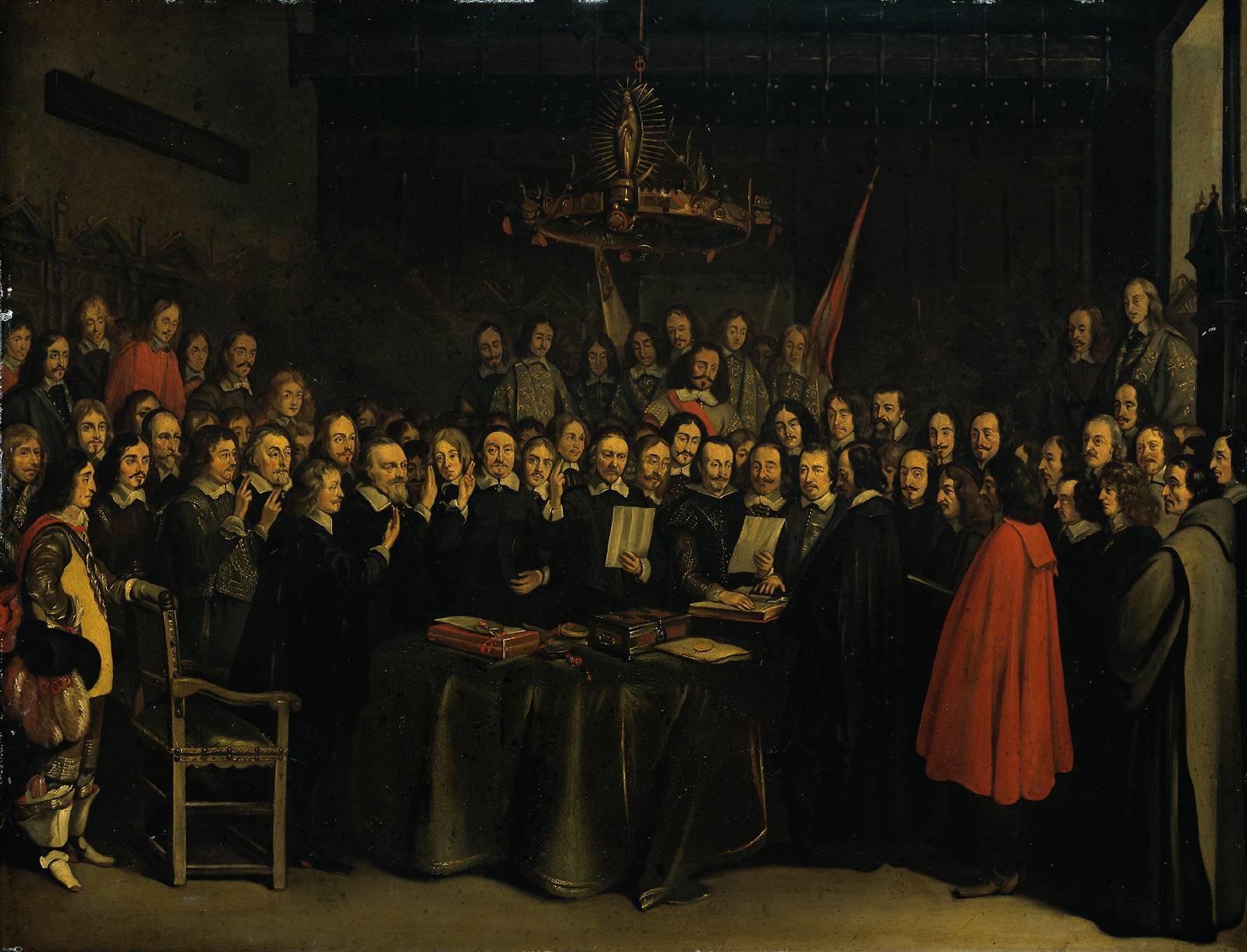
As one innovative tool to make peace, the conflicting parties agreed in the Westphalian Peace Treaty on a so-called ‘normal year’. During the three decades of the war, many cities and territories of the Empire had repeatedly switched between different rulers. Depending on military successes, they were sometimes governed by Protestants, sometimes by Catholics. As a solution to the question of which faith and which rule should apply after the war the parties agreed upon a reference date. The ownership conditions valid on 1 January 1624 were to be restored. This idea was later described as an ‘arrangement for peace’. The peace treaty reads as follows:
‘2 The normative date for the restitution of religious affairs shall be 1 January 1624. The restitution of all Electors, Princes and Estates of both confessions, including the Imperial knights and the Imperial cities and villages, shall therefore transpire without delay, such that all that has occurred in the meantime [i.e. since 1624], all published and executed verdicts, edicts, accords, treaties, and other legal arrangements as well as all of their implementations shall be considered null and void. Everything is to be restored to that condition of that above-mentioned year and day.’
Context:
After four years of negotiations, the treaties of Münster and Osnabrück were signed and proclaimed in October 1648. Putting an end to 30 years of war, the treaties found political regulations for the co-existence of different Christian confessions in Germany. They established a new political balance between the European powers.
Is turning the clock back a sensible response to religious division? Can you think of a better solution? What might this have meant for the ordinary people?
Further information about the Westphalian Peace can be found at On Site, In Time.
For more information on this and other peace treaties, see