
The Edict of Nantes and the commissioners
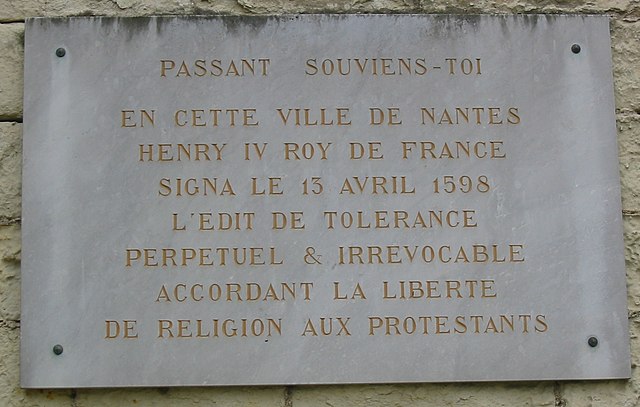
The Edict of Nantes, issued in 1598, was a landmark decree that sought to regulate the relationship between Catholics and Protestants (Huguenots) in France, following 36 years of civil war marked by intermittent peace treaties and renewed conflict. The Edict granted Protestants the right to worship and offered them a number of fortified towns as a safeguard. However, it also imposed restrictions: Protestants were not allowed to worship in Paris, at the royal court, or in the army.
While the Edict is often praised for ending decades of religious warfare, it did not eliminate the underlying distrust between the two religious communities. Over time, Protestants grew frustrated with how the Edict was implemented, particularly as Catholics regained influence and Protestant rights gradually eroded. This discontent culminated in 1685, when King Louis XIV revoked the Edict, stripping Protestants of their legal protections and reigniting tensions.
After its proclamation, the Edict of Nantes had to be implemented across the French kingdom. To achieve this, royal commissioners—one Catholic and one Protestant—were dispatched to towns and villages. Their role was to explain the terms of the Edict, listen to local concerns, and ensure that the peace measures were observed. One of the most complex tasks they faced was managing the composition of local governments in religiously mixed communities.
To maintain balance, the commissioners often imposed quotas, assigning positions in local administrations to each religious group. However, the distribution varied significantly. In Grenoble, Protestants received only one-tenth of local representation, while in Valence, they held as much as nine-tenths. This shows how the process of pacification took on a highly localized character, shaped by the unique religious and political dynamics of each community.
To what extent should religious differences influence political power and decision-making?