
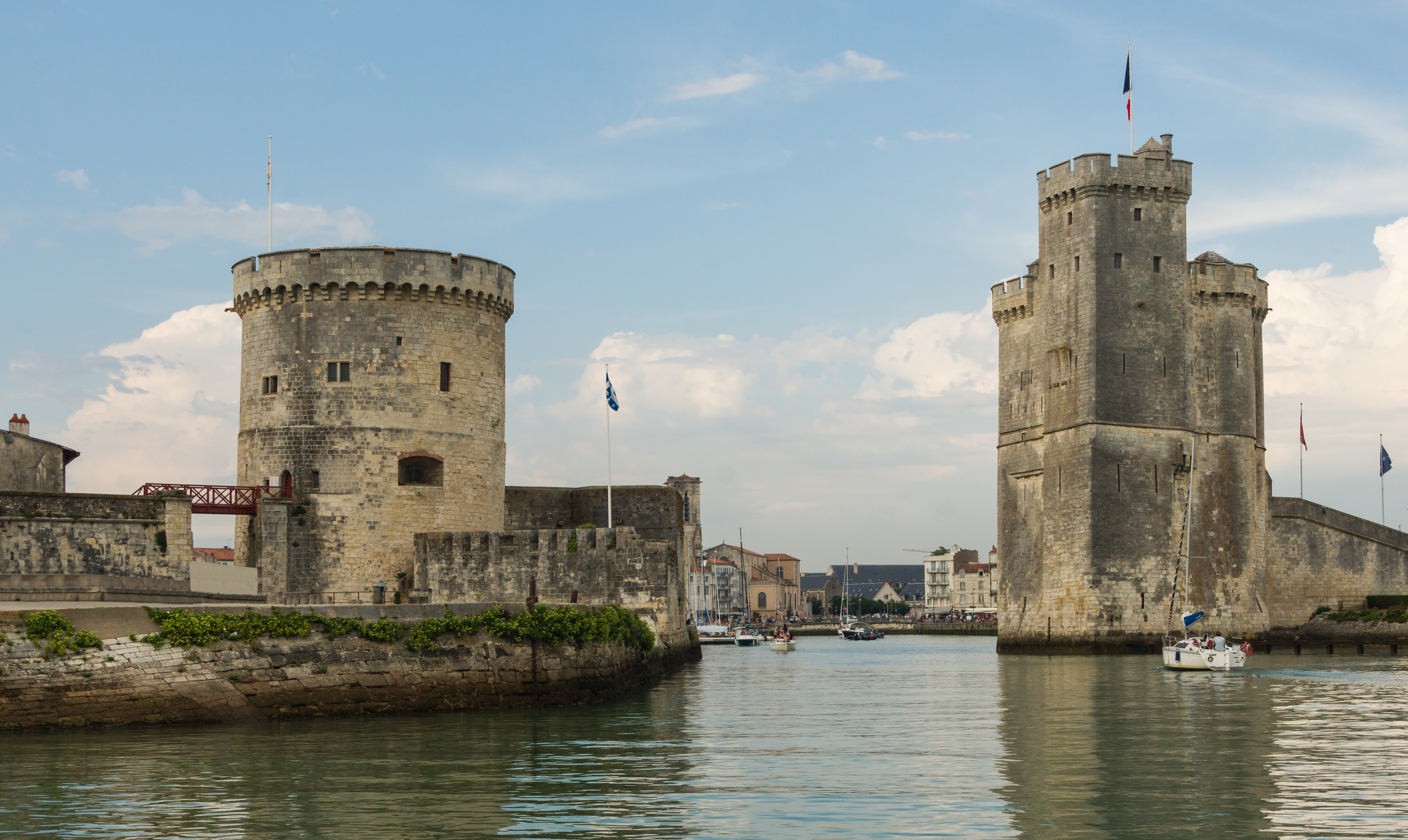
La Rochelle
The Edict of Nantes assigned safe places to Protestants where they could be protected in case of renewed tensions. One of the most important of these was the heavily fortified city of La Rochelle. That city had been a centre of the Protestant forces in France since the mid-sixteenth century. Around 1600, the large majority of its inhabitants were Protestants. Its position on the Atlantic coast made the city strategically important. Its strong fortifications protected the city from attack from the sea as well as from land. Because of this position, the French King Louis XIII (1601–1643) and his advisors considered La Rochelle and other Protestant strongholds as dangers for the French Monarchy. After about 20 years of pacified tension, the king was unsatisfied with this situation. He laid siege to and conquered the city, and the initial balance of rights of the Edict of Nantes disintegrated.
The Edict of Nantes (1598) settled the relations between Catholics and Protestants in France. In the preceding 36 years, France had gone through a series of civil wars. These wars alternated with treaties that made religious peace between Protestants and Catholics. The Edict provided the right to worship to Protestants and assigned them various fortifications in France as a safeguard. But it also limited their rights in other ways. For example, Protestants could not worship in Paris, at the royal court or in the army.
The Edict of Nantes remained in force until 1685. In that year, King Louis XIV revoked the rights of Huguenots in France. The perception of the Edict of Nantes is thus divided. While it succeeded in ending decades of war, it did not diffuse the distrust between French Catholics and Protestants. Moreover, Huguenots lamented that it allowed Catholics to gain in strength and diminish the rights of Protestants in the following decades.
How important is it for religious minorities to be able to defend themselves against threats? What should the role of the government have in that defence?
Further information about the Edict of Nantes can be found at On Site, In Time.
For more information on this and other peace treaties, see
Title
La Rochelle
content
The Edict of Nantes assigned safe places to Protestants where they could be protected in case of renewed tensions. One of the most important of these was the heavily fortified city of La Rochelle. That city had been a centre of the Protestant forces in France since the mid-sixteenth century. Around 1600, the large majority of its inhabitants were Protestants. Its position on the Atlantic coast made the city strategically important. Its strong fortifications protected the city from attack from the sea as well as from land. Because of this position, the French King Louis XIII (1601–1643) and his advisors considered La Rochelle and other Protestant strongholds as dangers for the French Monarchy. After about 20 years of pacified tension, the king was unsatisfied with this situation. He laid siege to and conquered the city, and the initial balance of rights of the Edict of Nantes disintegrated.
Context
The Edict of Nantes (1598) settled the relations between Catholics and Protestants in France. In the preceding 36 years, France had gone through a series of civil wars. These wars alternated with treaties that made religious peace between Protestants and Catholics. The Edict provided the right to worship to Protestants and assigned them various fortifications in France as a safeguard. But it also limited their rights in other ways. For example, Protestants could not worship in Paris, at the royal court or in the army.
The Edict of Nantes remained in force until 1685. In that year, King Louis XIV revoked the rights of Huguenots in France. The perception of the Edict of Nantes is thus divided. While it succeeded in ending decades of war, it did not diffuse the distrust between French Catholics and Protestants. Moreover, Huguenots lamented that it allowed Catholics to gain in strength and diminish the rights of Protestants in the following decades.
Questions
How important is it for religious minorities to be able to defend themselves against threats? What should the role of the government have in that defence?
Temporal Coverage
16th century
Spatial Coverage
Europe, France
map
44.3981/ 0.4958
Subject
Is Referenced By
Bibliographic Citation
Benjamin J. Kaplan, Divided by Faith, Harvard University Press, 2007
Audience
Yes
Creator
Christophe Schellekens

